
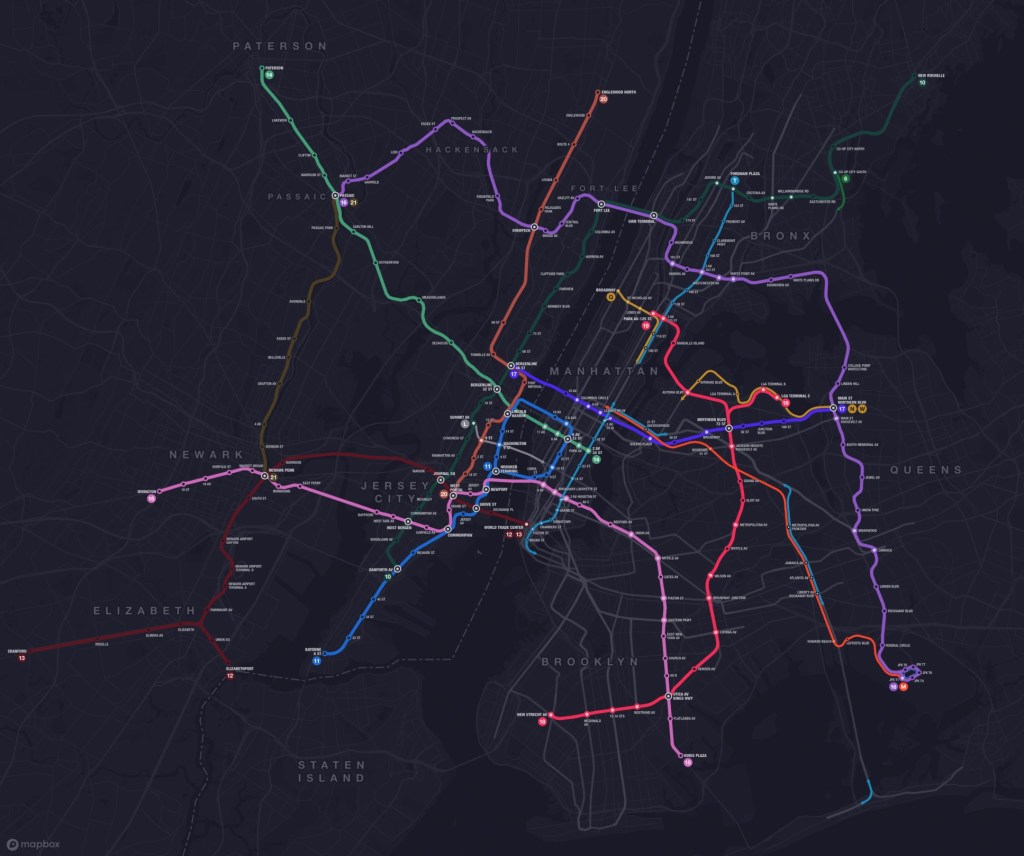
After publishing the introduction to the Greater New York Metro Plan, I naturally wanted to get it in front of more people’s eyes. After all, this blog is just one of millions and millions of websites on the internet. I shared the map of the proposal on Reddit (with a link back to my blog post) in the hopes not only doing just that, but also getting some feedback to improve the plan.
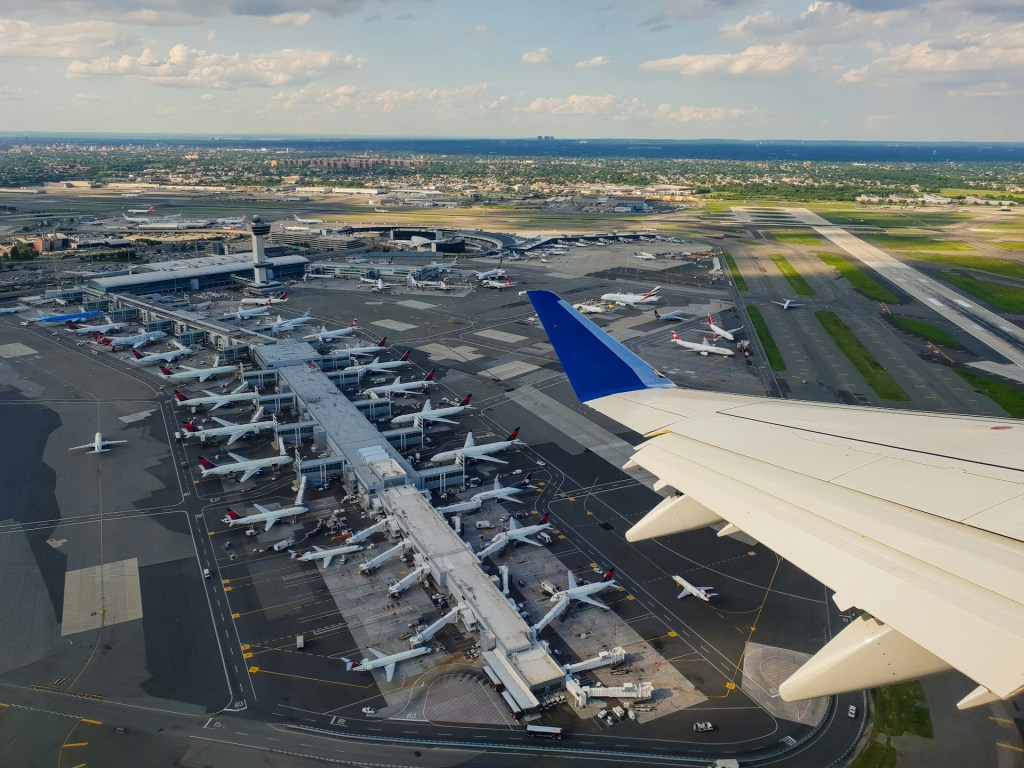
The response included both positive and mixed feedback along with some thoughtful suggestions about what was missing or unclear. One of the most helpful critiques was that connections to both airports within the city were missing. Admittedly this was a glaring omission for what is supposed to be a regional-level plan, so I rectified that with new additions to the plan. Read more about these additions below.
Another theme was that the relationship between the Greater New York Metro Plan and the existing NYC Subway system wasn’t clear. The GNYM is supposed to be an independent but integrated system, and while the plan was created with certain NYC Subway expansions in mind, I treated them as separate proposals. The Part 1 blog post does elaborate on this, it’s not entirely clear on the map of the proposal. However, there is merit to including traditional NYC subway expansions in the GNYM plan — even if they’re different systems — so I added them in for the purpose of clarity.
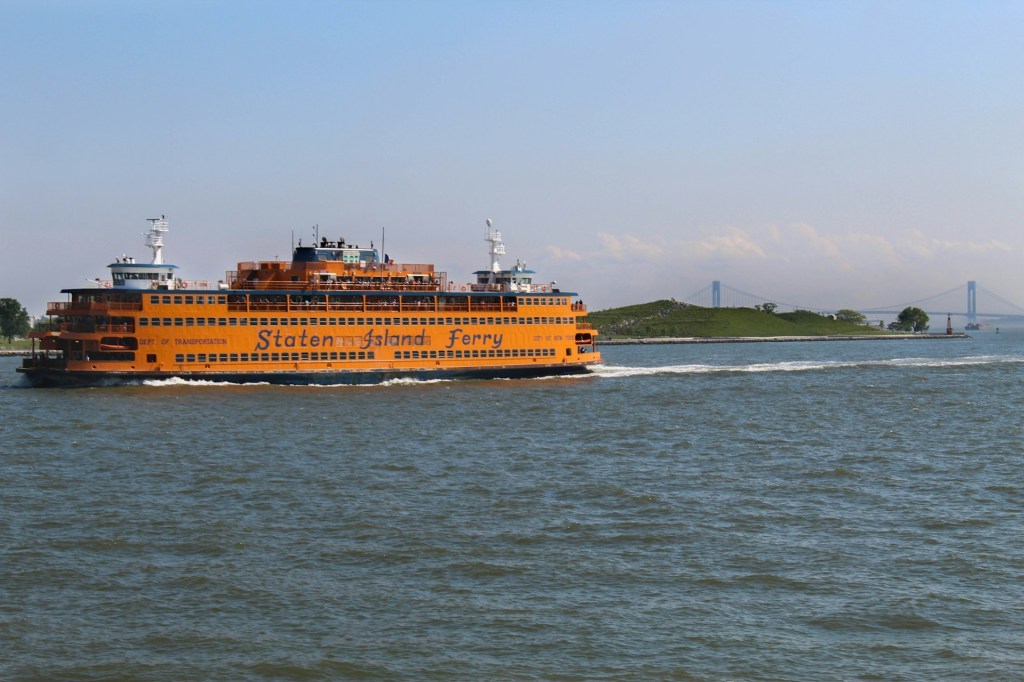
Several commenters mentioned the lack of service to Staten Island as well. While it would be nice for Staten Island to be more integrated with the rest of the region’s rail transport, the reality is that the borough just doesn’t have the population density or development pattern necessary to support a new subway line (and they already have the Staten Island Railway). What makes it even less feasible is the geographical constraint in the borough’s name — it is an island, and any rail connection to the rest of the city or even New Jersey is immediately much more difficult and expensive. With that and the population density of the island in mind, it just doesn’t make much sense to propose new rail transit, even in a fantasy proposal.
Lastly, a suggestion for a line under Bloomfield Av in Newark and another from Newark to the Oranges stood out to me. In a previous version of the plan I had the L train extension keep going from the intersection with Line 10 west to Secaucus Junction and parallel the NJ Transit Morris & Essex Line through Harrison, Newark, and Oranges. I scrapped it because I was afraid the L train would end up being too long (and prone to delays) and I thought that instead, there could be some sort of frequent regional rail service along the NJ Transit line. As for a potential metro line under Bloomfield Av in Newark, I wonder about how it might mostly duplicate existing Newark Light Rail service. Both of those things being said, I don’t know if I’m satisfied with how my plan serves (or rather, doesn’t serve) the Oranges, which are heavily urbanized and probably warrant heavy rail mass transit service. Maybe another revision will be warranted!
Proposal
To accommodate a new branching service pattern for the Interborough Express, the Line 18 designation will apply to the LaGuardia branch and the Line 19 designation will apply to the 125 St branch. Line 20 will now refer to the Jersey City–Englewood service, and Line 21 will refer to the Newark–Passaic service.

63rd Street, Queens Super Express, and JFK
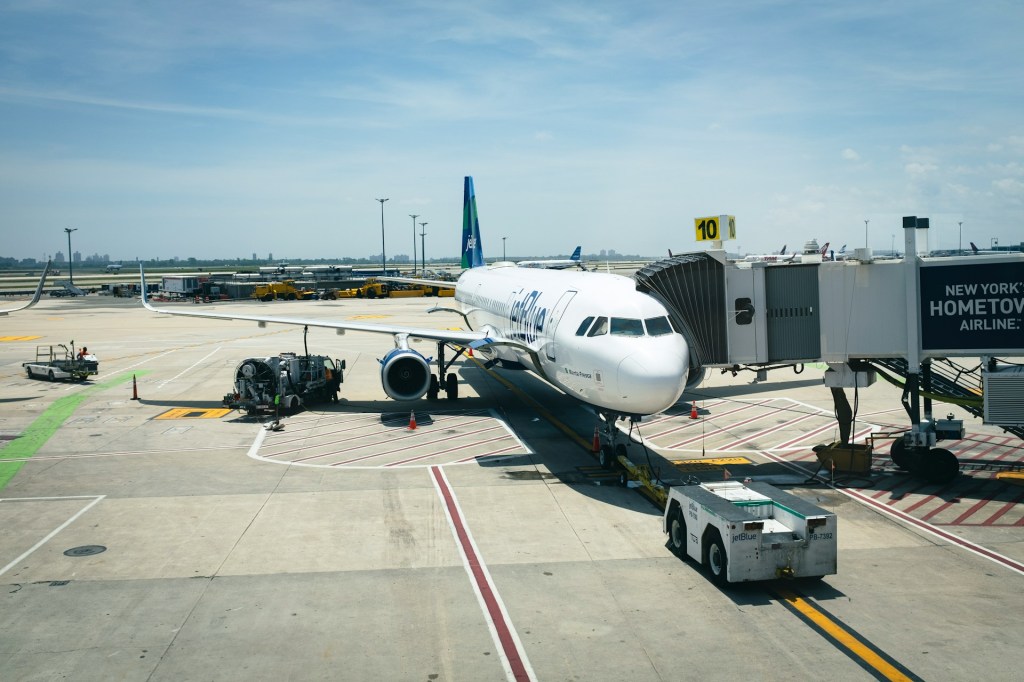
This one was kind of a no brainer that I only avoided because of the existence of the JFK AirTrain. But this is a fantasy proposal, so we’re going to replace the AirTrain instead: Line 16 will extend from its previously proposed terminus at the Jamaica LIRR station, down the Van Wyck Expressway to JFK. It should be able to reuse parts of the AirTrain’s infrastructure, looping counter-clockwise around the airport’s terminals. An inter-airport clockwise loop service will remain for terminal-to-terminal transfers
To provide a direct link between JFK and Manhattan, I’m reviving the once-proposed Queens Super Express Line along the LIRR Main Line right-of-way and combining it with QueensLink, with some small adjustments. The M train will serve this line.
Currently, AirTrain infrastructure is built for 240-foot-long, 4-car trains. This poses a problem for connecting NYC subway trains to the airport without demolishing or completely overhauling the existing infrastructure, as the M train runs 480-foot-long, 8-car trains. However, shorter trains are a central tenet for new lines within the Greater New York Metro Plan, so Line 16 trains should instead be able to re-use this infrastructure.
There will be a main JFK station at Terminal 1, where the M train will terminate. Passengers can transfer to Line 16 or the inter-airport loop service to reach other terminals. Starting west from the airport, the M will take a new (but similar to AirTrain) alignment to Howard Beach, where it will join the A train (and future Second Avenue Subway V train). From there, it’ll use the center express tracks of the former Rockaway Beach Branch while the A and V remain on the local tracks. Then, after the A diverges, it will follow the QueensLink plan’s proposed alignment.
However, instead of the M joining the Queens Boulevard Line as a local service, it will instead join the LIRR Main Line and run nearly nonstop to Manhattan, stopping only at Woodside before merging with the 63rd Street Line.
Right now, the 63rd Street Line is served by the F train, but it will swap places with the M train in December of this year, which would facilitate this new airport express service. To make up for the lost local service along the QBL, the V train comes into play. It will serve the southern half of the future Second Avenue Subway (up to the proposed 55 St station), then merge with the M along the 63rd Street Line, before diverging to the QBL to serve its local stops. However, after 63 St–Rego Park, it will branch off of the QBL and rejoin the M along the QueensLink alignment.
Instead of continuing with the M to JFK, the V will continue with the A south to the Rockaways and take over the Rockaway Park Shuttle service, providing Rockaway Park-bound riders with a transfer-free connection to Manhattan.
IBX and LaGuardia Connection
This draws direct inspiration from Vanshnookenraggen’s recent IBX North: A Bridge to Harlem and LGA blog post, adapting the IBX branching service pattern but without a direct 125 St–LGA train. It also adds N/W service to LaGuardia and onward to Flushing, creating both a direct Midtown–LGA link and a Flushing–LGA connection.

From Northern Blvd–73 St, the IBX would remain underground before splitting into two branches. Line 18, the LGA branch, would curve east, following the proposed alignment in Vanshnookenraggen’s plan, and stop at LaGuardia Terminals B and C. Line 19, the 125 St branch, would curve west onto the Grand Central Parkway, stopping at Astoria Blvd (intersecting with the to N and W trains and facilitating 125 St–LGA trips via the N and W LGA extension), Randalls Island, 2 Av–125 St (intersecting with the T train), and the 125 St–Lexington Av/Park Av hub for transfers to the 4, 5, 6, Q, and Metro-North trains.
As for the N and W extension, trains would remain elevated traveling north along 31 St before curving east onto 19 Av, making a stop in the vicinity of Terminal A, then curving to the south to avoid the airport’s flight paths. The N and W would join Line 19 through Terminals B and C before continuing elevated along the Grand Central Parkway and Northern Blvd, and then terminating at the Main St–Northern Blvd hub in Flushing, along with Line 17 (with a transfer available to Line 16).
Other Subway Changes and Extensions
As alluded to above, the Q train will be extended west along 125 St, providing crosstown service through Harlem and intersecting with the 4, 5, and 6 trains at Lexington Ave (and MetroNorth trains nearby), the 2 and 3 trains at Malcolm X Blvd/Lenox Av, the A, B, C, and D trains at St. Nicholas Av, and the 1 train at Broadway.
The T train will extend north into the Bronx along Third Avenue, intersecting with Line 16 at 163 St, and terminating at Fordham Plaza, intersecting with Line 10.
Southbound, the T and V trains will follow the future Second Avenue Subway south to Chatham Square, before diverging from the planned alignment and instead utilizing the existing BMT Nassau Street Line. J/Z trains will terminate at Chambers St, and the T and V will take over south of that point. From there, service could potentially extend into Brooklyn via the Nassau Street Line’s connection to the Montague Street Tunnel, which still has unused capacity.
Finally, a short one-stop extension of the 6 train will bring it from Pelham Bay Park to Co-op City alongside Line 10.
 Tyler Fouch
Leave a comment