

Predictive Modeling of New York City Transit Demand, 2025
This project was created as part of a larger project to devise a plan for much-needed rapid transit expansion in the NYC metro area. I needed a way to estimate rapid transit ridership at any location within the region in order to statistically support decisions — like station locations, route alignments, and proposed service frequencies — within the plan.
I developed a multiple regression model in Python, based on realistically available parameters: population density, job density, distance to Midtown Manhattan, the amount of service the station receives or might receive, whether it is a terminus station, whether it’s ADA accessible, and whether it’s a “commuter” station (a station with a transfer to commuter rail or a bus terminal, for example).
The final model explained ~70% of variation in NYC subway ridership, identifying strong relationships between accessibility, land use, and transit demand…

Survey-Based Analysis of Reasons for Ticket-Splitting in the 2024 U.S. Election, 2024
Contributed a question to a national opinion poll conducted by Verasight
Used R to clean and analyze survey data, identifying key drivers behind ticket-splitting behavior in the 2024 U.S. election
Found that policy preferences and candidate favorability were both strongly influential, with favorability emerging as stronger motivator than unfavorability.
Wrote an op-ed…

Measuring the Impact of Disability on Economic Inequality, 2024
Project completed as part of the course “Studying Social Inequality Using Data Science.” Written and conducted by a team of four students, including me.
We studied how economic inequality, measured by employment rate and annual income, compares among people in different categories of disability (segmented into two age groups). We used R to analyze data sourced from the 2023 IPUMS Annual Social and Economic (ASEC) supplement to the Current Population Survey (CPS). Afterward, at the suggestion of our professor, we worked on it further and submitted an extended abstract to be considered for inclusion in the Population Association of America (PAA) 2025 Annual Meeting.
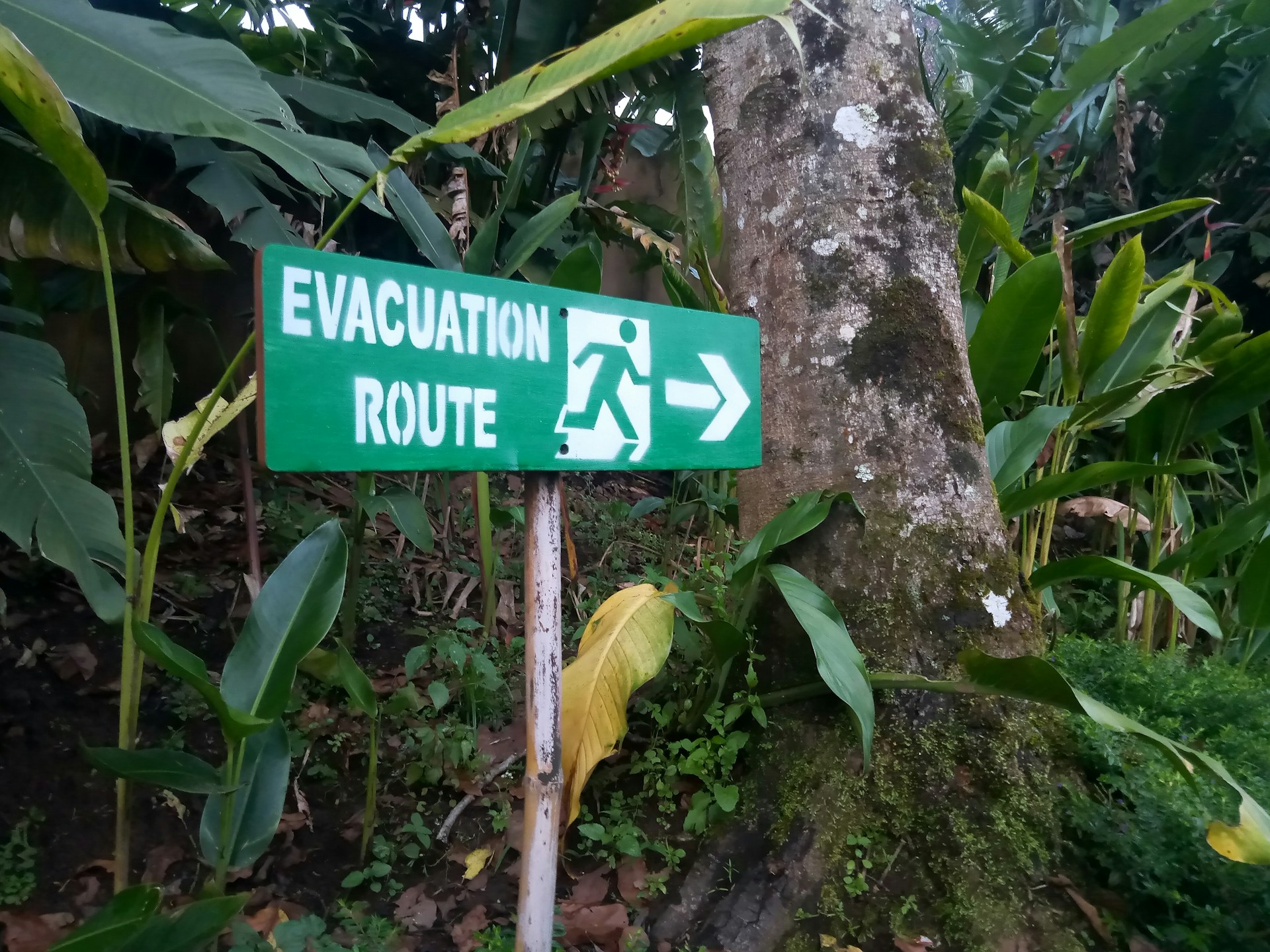
Improving Mass Evacuation in Under-Resourced Communities Using Technology, 2024
Research project completed as part of the course Computing and Global Development, which explored how computing technologies can be used in different global development domains, such as agriculture, finance, health, social justice, and education. Written and conducted by a team of four students, including me.
We explored how we might be able to improve safety and efficiency in mass evacuations, analyzing past evacuation successes and failures in New Orleans, populations that have been overlooked, and the role of public transportation in evacuation. We focused on under-resourced communities like the impoverished, the elderly, and the disabled. Considering these factors, we devised a public transportation plan with the support of a traffic simulation, integrated with technologies like Google Maps, SMS, radio, and telephone for widespread reach and chaos mitigation. We found that the evacuation plan would be effective for those without car access and those in poverty, but further research is needed in order to perfect evacuation efforts and ensure that all individuals who seek safety can reach it.
 Tyler Fouch